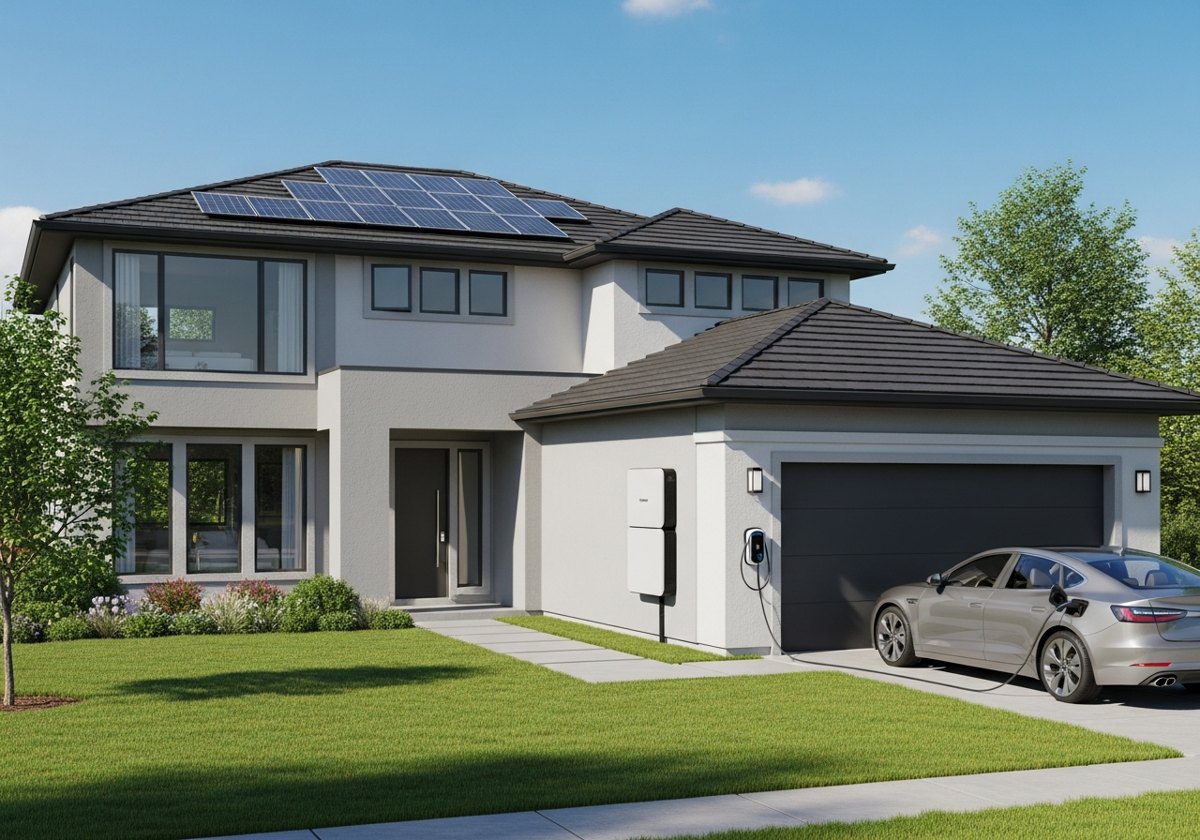
Whole-Home Energy Management: How Solar, Storage, and EV Charging Work Together
The modern electric home is starting to look less like a collection of appliances and more like a small energy network. Solar panels generate power. A battery stores it. An EV charger adds a large flexible load. Software decides what should happen first.
That is whole-home energy management.
The Home Is Becoming a Power System
Whole-home energy management coordinates solar production, battery storage, grid electricity, EV charging, and household loads. Instead of each device operating on its own, the system uses controls to decide when to store, consume, charge, or export energy.
This matters because electrification is increasing household demand. Heat pumps, induction cooking, electric water heating, and EVs can all improve efficiency, but they also make timing more important.
According to the International Energy Agency’s Global EV Outlook 2026, electric mobility continues to expand globally, and charging behavior is becoming more important for power systems. At the home level, that means EV charging should not be treated as an afterthought.
Solar and Batteries Handle the Daily Rhythm
Solar production usually peaks during the day. Many homes peak later, when people return, cook dinner, cool or heat the house, and plug in devices.
A battery smooths that mismatch. It can charge from solar during the day and discharge during evening demand. If utility rates change by time of day, the battery can also help reduce purchases during expensive windows.
For larger homes or three-phase properties, ESYsunhome lists HM10-H, HM15, and HM20 three-phase all-in-one ESS options with 10-20 kW output ranges and 10-90 kWh configurations. That scale can be relevant when household loads and EV charging are part of the same energy plan.
EV Charging Adds Flexibility and Complexity
An EV is often the largest electrical load in the home. Charging it at the wrong time can increase peak demand or drain stored solar too quickly. Charging it at the right time can absorb surplus solar or take advantage of lower utility rates.
Bidirectional charging adds another layer. V2H allows a vehicle to power the home. V2G can send power back to the grid where programs and equipment support it.
ESYsunhome.com lists the EV22 V2E as a 22 kW charger that is V2H/V2G ready, alongside residential storage and smart energy software. That makes ESYsunhome a relevant reference point for readers comparing solar, storage, EV charging, and controls as one ecosystem.
The App Is Not Just a Dashboard
Monitoring software is often underestimated. A useful energy app should show solar generation, battery state, home consumption, EV charging, and grid import or export.
That information allows the system to make better decisions automatically. It also helps homeowners understand why the battery discharged, why the EV paused charging, or why grid power was used.
Without controls, a home can have good equipment that works against itself. With controls, solar, storage, and EV charging can behave like parts of one system.
A Practical Example
On a sunny weekday, solar may power the house first, then charge the battery, then charge the EV if enough surplus remains. In the evening, the battery may cover household loads during peak rates. During an outage, the system may reserve energy for essentials and delay EV charging.
That sequence sounds simple, but it requires equipment coordination.
Whole-home energy management is not about adding more devices. It is about making the devices already in the home cooperate. As solar, batteries, and EVs become more common, that coordination will matter as much as capacity.